


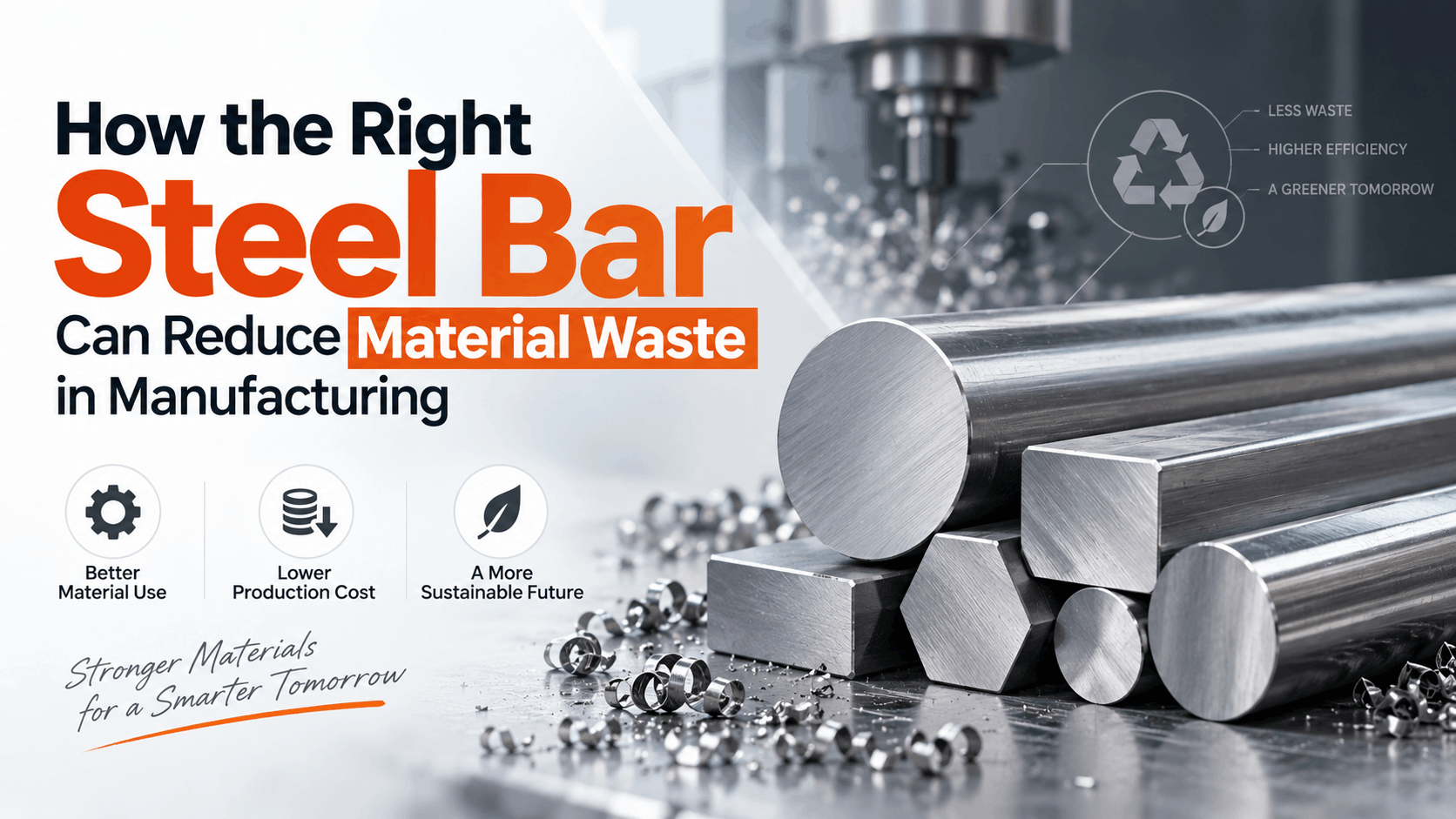
The issue of material wastage is often seen in manufacturing. Too much wastage of steel in the process of cutting and machining leads to higher production costs and wastage of material.
The selection of the right steel bar is crucial for manufacturing processes. It will significantly affect material consumption efficiency.
Why Does Steel Bar Selection Matter?
A steel bar is not necessarily appropriate for all applications in manufacturing. A large steel bar may necessitate additional machining before attaining the requisite component dimensions. This results in an increase in material waste and machining time.
In contrast, a steel bar of the correct dimensions may reduce the amount of material removal required. In other words, more steel is retained in the product form.
1. Choose the Right Bar Size
One of the simplest ways to cut down on waste is to use a steel bar which is almost similar in size to the component.
This is because if there is a need to machine a component from a 30 mm bar diameter, the utilization of a larger bar could lead to wastage of material.
2. Pay Attention to Tolerances
The term tolerance refers to the extent to which a steel bar deviates from its desired dimensions.
Steel bars produced with more accurate and tighter tolerances require less cutting of material during the machining process. This is especially crucial in CNC machining.
3. Consider the Bar Shape
The shape of the steel bar also affects material usage.
Round, square, hexagonal, flat, and special-shaped bright bars can be selected according to the final component design. Using a shape that is closer to the required component can reduce unnecessary machining and material loss.
4. Select the Appropriate Steel Grade
Each application requires a specific grade of steel. Selecting the appropriate grade of steel may assist in preventing issues, like rapid wear and tear of tools and poor machinability. Selecting the proper material from the start can save on costs and ensure that steel is not wasted on parts that will not meet the requirements.
5. Don't Ignore Surface Finish
Machining requirements are also impacted by the condition of the surface being machined. Cold drawn, peeling, and grinding of steel bars are just some of the examples that give various degrees of accuracy and surface finish.
With a starting surface that is good enough for the job, there may be no need for further operations on the material.
Less Waste Starts With Better Material Selection
Reducing steel waste does not always require major changes to the manufacturing process. Sometimes, it starts with selecting the right raw material.
The correct steel bar size, shape, grade, tolerance, and surface finish can reduce unnecessary machining and help manufacturers get more usable material from every bar.
For manufacturers working with precision components, choosing a reliable steel bar supplier is therefore an important part of improving material efficiency and controlling production costs.